Blog

How to Choose the Best Industrial Storage Racks?

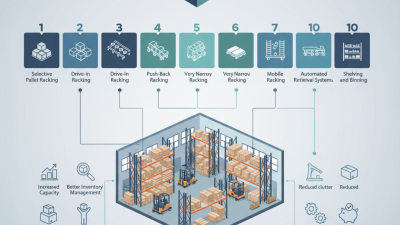
Choosing industrial storage racks is not simply a matter of comparing prices or counting shelves. The right system must fit your products, building, equipment, workflow, and future growth. A pallet rack designed for boxed goods may perform poorly with long steel profiles or irregular loads. Start with measurable facts. Record pallet dimensions, unit weights, turnover rates, ceiling height, aisle width, and available floor space. These details reveal whether selective racks, drive-in systems, cantilever racks, or mobile storage offer practical value. Appearance matters less than performance.

Safety and reliability depend on precise specifications. Check beam capacity, upright strength, anchoring requirements, load distribution, and clearance above stored goods. Forklift paths should allow smooth turns without striking frames or nearby workers. Product data from established manufacturers can support better decisions, but independent engineering advice remains valuable for complex facilities. Local building requirements and workplace safety rules also deserve careful review. A qualified professional should verify unusual loads, seismic conditions, or high-bay installations. Do not guess here.

Real warehouse experience often exposes problems that drawings overlook. A rack may fit on paper but create daily congestion near a loading door. Fast-moving cartons may become inconvenient when stored too high. Even careful plans can miss cleaning access, damaged pallets, or changing inventory patterns. That weakness is worth acknowledging. Revisit the design after a trial layout, speak with operators, and inspect similar installations when possible. The best choice balances capacity, access, durability, maintenance, and total operating cost. It should also leave room for safer decisions later.
How to Choose the Best Industrial Storage Racks?

Define Your Storage Requirements and Available Space

How to Choose the Best Industrial Storage Racks?
Define Your Storage Requirements and Available Space
Choosing industrial storage racks starts with accurate measurements, not attractive catalog images. Record the room’s length, width, ceiling height, columns, doors, sprinklers, and floor condition. Measure twice. A small error can block a forklift route or reduce usable capacity.
Study the products being stored. Note their weight, dimensions, packaging, and movement frequency. Heavy pallets may require selective racks, while small cartons may need adjustable shelves. Check the rack’s rated load, beam span, frame height, and anchoring method with a qualified supplier or engineer. Leave enough aisle space for safe handling equipment and routine inspections. Future inventory matters too, although predicting growth is imperfect.
Tips:
Mark the planned rack footprint with tape before installation. Walk the route with a loaded trolley. Check whether workers can reach each level without stretching or climbing. Keep emergency access clear, and confirm that the floor can support the combined rack and product weight. In one warehouse assessment, unused space above a doorway seemed ideal, but services hidden there made the location impractical. Site details often defeat a clever layout. Recheck them.

Compare Industrial Rack Types and Their Applications

How to Choose the Best Industrial Storage Racks?

Industrial rack selection should begin with the materials, not the rack’s appearance. Pallet racks suit standardized loads handled by forklifts. They offer direct access to each pallet and support fast warehouse turnover. Longspan shelving works better for cartons, tools, and smaller components. Workers can load it by hand without special equipment.

Cantilever racks are designed for long products, such as pipes, timber, and metal profiles. Their open fronts make loading easier, especially when product lengths vary. Mobile racks can increase floor capacity by reducing fixed aisles. However, they need careful planning, stable floors, and disciplined operation. A rack that saves space may slow picking if access becomes awkward. That trade-off is easy to underestimate.

Tips: Measure load weight, height, and dimensions before comparing systems. Check aisle widths against the turning radius of your handling equipment. Ask a qualified storage professional to verify frame capacity, beam levels, anchors, and protection features. Inspect damaged components immediately and remove unsafe sections from service. Keep heavier goods at lower levels when practical. Do not rely only on catalog ratings; real loading patterns can differ. A perfect rack rarely exists. The best choice balances capacity, access, workflow, and future changes. Even experienced teams sometimes overestimate unused vertical space. Recheck those assumptions before installation.

Evaluate Load Capacity, Dimensions, and Material Quality

How to Choose the Best Industrial Storage Racks?

Load capacity is the first calculation, not a guess made from appearance. Record each pallet’s weight, dimensions, and placement pattern. Then include forklift impact, uneven loading, and future inventory growth. ANSI/RMI MH16.1-2023 requires rack designs to reflect specified loads and structural conditions. A rack rated for 2,000 kilograms per level may fail if that weight is concentrated in one corner. Distribute it evenly.

Dimensions matter just as much. Measure aisle width, ceiling height, beam spacing, and forklift turning clearance at the actual site. OSHA 29 CFR 1910.176(b) requires stored materials to remain stable and secure. Crowded aisles create practical risks, even when the rack calculations look correct. Leave clearance above the highest load. Measure twice.

Material quality deserves physical inspection. Check steel thickness, weld consistency, beam connectors, upright protection, and corrosion near loading doors. The Rack Manufacturers Institute identifies beam deflection and upright strength as key design considerations. Request test records, load plaques, and engineering calculations from the supplier. I have seen clean-looking frames hide bent uprights after minor impacts. That detail is easy to miss. Also, powder coating is not a substitute for structural quality. Recheck the system after installation, because real warehouse behavior often differs from the original plan.

How to Choose the Best Industrial Storage Racks? - Evaluate Load Capacity, Dimensions, and Material Quality
Rack Type Typical Load per Level Typical Bay Load Common Dimensions Recommended Material Quality Surface Protection Best Application Key Evaluation Point
Light-Duty Boltless Shelving 100–300 kg per level 400–1,200 kg per bay Height: 1.8–2.4 m
Width: 0.9–1.2 m
Depth: 0.4–0.6 m
Cold-formed steel uprights with reinforced steel shelves; shelf deflection should be checked at the rated load. Powder-coated steel for dry indoor areas. Small parts, cartons, tools, and archive materials. Confirm that the shelf rating applies to a uniformly distributed load, not a concentrated point load.
Standard Selective Pallet Rack 500–1,500 kg per beam level 2,000–6,000 kg per bay Height: 3–8 m
Width: 1.8–2.7 m
Depth: 0.9–1.1 m
High-strength structural or cold-formed steel frames with formed beam connectors and bracing. Powder coating indoors; galvanized components may be preferred in humid areas. Mixed-SKU pallet storage and frequent forklift access. Check beam capacity, upright capacity, pallet dimensions, aisle width, and floor anchoring requirements.
Heavy-Duty Pallet Rack 1,500–3,000 kg per beam level 6,000–12,000 kg per bay Height: 4–10 m
Width: 2.4–3.6 m
Depth: 1.1–1.2 m
Certified structural-grade steel with thicker uprights, reinforced bracing, and high-capacity beam profiles. Durable powder coating; galvanized or corrosion-resistant parts for demanding environments. Dense palletized goods, manufacturing components, and heavy inventory. Require an engineered layout that accounts for seismic conditions, forklift impact, slab strength, and load center.
Drive-In Pallet Rack 500–1,500 kg per pallet position 10,000–40,000 kg per lane or block Height: 4–8 m
Lane depth: 4–10 pallet positions
Depth varies by pallet size
Heavy structural steel frames, guide rails, pallet support rails, and impact-resistant bracing. Powder-coated frames with wear-resistant protection on rails and entry points. High-volume storage of similar products using first-in, last-out rotation. Verify pallet condition, forklift clearance, lane depth, and load stability before selecting this system.
Cantilever Rack 250–1,500 kg per arm 1,000–6,000 kg per upright section Height: 2–6 m
Arm length: 0.6–1.2 m
Section width: 1.2–2.4 m
Structural steel columns and arms with bolted or welded connections designed for balanced and unbalanced loads. Powder coating indoors; hot-dip galvanizing for outdoor or high-moisture storage. Long items such as pipes, timber, profiles, panels, and metal sheets. Check arm deflection, column stability, base anchoring, and the required front and rear clearance.
Mobile Shelving or Mobile Rack 200–800 kg per shelf or level 1,000–4,000 kg per mobile carriage Height: 1.8–3.0 m
Unit width: 0.9–1.2 m
Depth: 0.4–1.0 m
Rigid steel shelving mounted on reinforced mobile bases with load-rated rails, wheels, and locking systems. Powder-coated steel; corrosion-resistant rails are recommended in humid environments. High-density storage where floor space is limited and access frequency is moderate. Confirm floor flatness, distributed carriage load, anti-tip features, aisle safety, and emergency release access.
Selection note: The capacities shown are common planning ranges for generic industrial systems. Final rack capacity must be verified against the manufacturer’s tested specifications, local regulations, installation method, pallet condition, load distribution, seismic requirements, and floor capacity.

Check Safety Features, Accessibility, and Compliance Standards

Choosing the best industrial storage rack begins with safety, not capacity alone. A rack may hold heavy loads yet fail under poor installation or uneven floors. Check the stated load rating for every beam level. Confirm that the rating matches pallet weight, dimensions, and lifting equipment. Load plaques should remain visible from the main aisle. Do not rely on memory.

Inspect upright frames, beams, connectors, anchors, and protective guards. Look for bent steel, missing locking pins, cracked welds, or loose floor anchors. Small damage can become serious during repeated forklift impact.

Keep clearances around sprinklers, lighting, doors, and emergency routes. A practical inspection log helps, although busy teams sometimes record checks too quickly. That weakness deserves correction.

Accessibility affects daily productivity and emergency response. Measure aisle width against forklift turning paths and pedestrian movement. Keep picking zones reachable without unsafe climbing or stretching. Mark walkways clearly, and separate them from vehicle routes where possible.

Check that rack placement does not block exits or fire equipment. Compliance requirements vary by location and building type, so verify current local standards with a qualified safety professional. Include seismic, fire protection, inspection, and installation requirements where applicable.

A reliable supplier should provide drawings, specifications, and traceable test information. Ask difficult questions. Silence is not proof of compliance.

Plan Installation, Maintenance, and Future Expansion

Choosing industrial storage racks requires more than comparing load ratings. Installation, maintenance, and future expansion should shape the decision from day one. Begin with a measured floor plan, including aisle widths, forklift turning paths, sprinkler clearances, and emergency access. Confirm slab capacity before drilling anchors. ANSI/RMI MH16.1 guidance supports engineered rack design, documented load limits, and regular inspections.

Installation quality affects long-term safety. Use qualified installers, verify upright alignment, and record every beam level and anchor location. OSHA estimates that forklifts cause about 85 worker deaths and 34,900 serious injuries annually in the United States. Poor rack placement can increase those risks. Maintenance should include monthly visual checks, immediate damage tagging, and written repair records. A bent upright is not a cosmetic issue. It may signal hidden structural stress.

Tips: Leave expansion zones near active picking areas. Select adjustable components, but do not assume every future beam fits safely. MHI’s 2024 Annual Industry Report found that 55% of surveyed supply chain leaders currently use cloud computing, while 91% expect adoption within five years. Digital inventory records can support rack mapping, inspection alerts, and capacity planning. Still, software cannot correct bad measurements. The imperfect part is often human: teams underestimate seasonal growth, then add racks where fire access or forklift clearance should remain. Review projected inventory, product dimensions, and handling equipment annually. Keep spare protection posts and approved replacement parts on site.

How to Choose the Best Industrial Storage Racks?

Plan installation, maintenance, and future expansion by matching the rack layout to the required material-handling equipment. The chart shows typical clear aisle-width planning references for common warehouse vehicles.

Planning note: Confirm the final aisle width with the equipment manufacturer, rack supplier, floor-load engineer, and applicable local safety requirements. Reserve clear space for inspections, repairs, and future rack expansion.