Blog

2026 Best Types of Warehouse Shelving Racks for Buyers

Choosing the right warehouse shelving racks in 2026 is not simply a matter of adding more storage space. It is a decision about product flow, worker access, inventory accuracy, and long-term operating cost. Carton size, pallet weight, picking frequency, ceiling height, and equipment movement all influence the best rack design. A narrow aisle may increase capacity, but it can also slow forklift traffic. More shelves are not always better.

John J. Bartholdi III, a respected warehouse design researcher and co-author of Warehouse & Distribution Science, wrote, “The purpose of a warehouse is to facilitate the movement of goods.” That principle remains highly practical. Racks should support smooth receiving, safe storage, efficient picking, and clear replenishment. Buyers should examine selective pallet racks, drive-in systems, push-back racks, cantilever racks, and modular shelving before making a final choice.

Details matter. Measure the actual cartons, not idealized product samples. Check upright spacing, beam capacity, floor conditions, and inspection access. Leave practical clearance around columns, sprinklers, doors, and pedestrian routes. Labels must remain visible from the working aisle. Small mistakes become expensive when stock turns quickly.

No rack is perfect. A system designed for maximum density may reduce flexibility. A highly adjustable layout may sacrifice some capacity. This guide compares the leading warehouse shelving racks for different warehouse sizes, product types, and handling patterns. It also questions common buying assumptions, because the cheapest quote can become the costliest decision after installation.
2026 Best Types of Warehouse Shelving Racks for Buyers

What Warehouse Shelving Racks Are and How They Support Storage Operations

2026 Best Types of Warehouse Shelving Racks for Buyers

Warehouse shelving racks are structured storage frames for cartons, bins, tools, and small inventory. They create vertical storage without blocking aisles. Common choices include boltless shelving, longspan shelving, mobile shelving, and adjustable steel units. Each type serves a different load, access, and picking pattern.

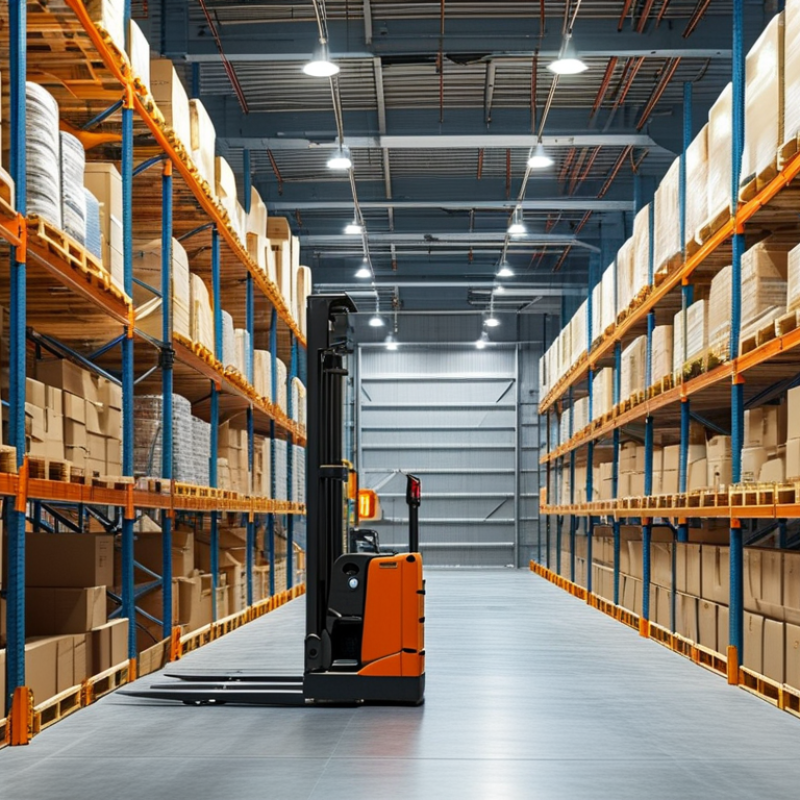
A boltless rack suits hand-loaded cartons and changing stock sizes. Longspan shelving supports wider loads, such as spare parts or packaged equipment. Mobile shelving saves floor space, but it needs careful aisle planning. Adjustable shelves also help when product dimensions change. That happens often. A practical site review should measure beam height, aisle width, floor condition, and picking frequency before purchasing.

Shelving supports operations by shortening search time and improving stock visibility. Clear labels and fixed locations reduce misplaced items. MHI’s 2024 Annual Industry Report found that 55% of supply chain leaders planned to increase technology and innovation investment. Shelving should therefore allow future barcode, sensor, or inventory-system upgrades. Yet technology cannot correct a poor layout. The U.S. Bureau of Labor Statistics recorded 1,190 fatal work injuries in transportation and material-moving occupations in 2022. This figure is not rack-specific, but it reinforces the need for stable frames, protected aisles, and documented inspections. No design is perfect. Overloading, rushed picking, and ignored damage can still defeat a sound plan.

Key Factors Buyers Should Assess Before Choosing Warehouse Shelving

Choosing warehouse shelving requires more than comparing shelf prices. Buyers should measure the products, cartons, pallets, and handling equipment used every day. Record the heaviest load on each level, not the average load. A full shelf changes the risk. Check the rack’s rated capacity, beam spacing, frame strength, and floor condition. Uneven concrete can create alignment problems and unstable loading. Leave enough aisle width for forklifts, carts, and safe pedestrian movement. A plan that looks efficient on paper may feel crowded during a busy shift.

Adjustability matters when inventory changes often. Shelves with flexible levels can reduce wasted vertical space and support seasonal stock. However, moving levels too frequently may slow operations and increase assembly errors. Inspect connection points, locking parts, and protective finishes before purchase. Look for clear installation instructions and accessible replacement components. Ask whether the system supports future expansion without forcing a complete redesign. This question is often overlooked.

Workflow should guide the final choice. Fast-moving cartons belong near packing or dispatch areas, while slow stock can use higher or less convenient levels. Label visibility, picking height, lighting, and barcode access also affect daily accuracy. Include installation, inspections, repairs, and relocation in the total cost. The cheapest rack may become expensive after repeated adjustments. Request load documentation and maintenance guidance from the supplier. Then test the proposed layout with actual boxes and equipment, because real movement exposes flaws that drawings hide.

The Best Warehouse Shelving Rack Types for Different Storage Needs

2026 Best Types of Warehouse Shelving Racks for Buyers

Different storage needs require different shelving rack designs. Boltless shelving works well for cartons, tools, and small parts. Its adjustable levels help teams change layouts without special equipment. For heavier loads, longspan shelving offers deeper beams and stronger support. It suits boxed inventory, spare components, and medium-weight containers. Choose pallet racking when goods arrive on pallets and forklifts need direct access. Check the rated load, beam length, and upright spacing before installation.

Small items often need better visibility than maximum capacity. Bin shelving keeps fast-moving parts organized near packing stations. Mobile shelving can increase floor capacity by reducing fixed aisles. However, it needs stable flooring and careful access planning. Narrow aisles may look efficient, but they can slow picking work. Measure turning space with a loaded cart, not an empty one. That detail is easy to overlook.

I have seen warehouses choose tall racks without checking ceiling obstructions. The result was wasted upper space and difficult maintenance. Adjustable shelving is more forgiving. Still, every level needs a clear load label and regular inspection. Rust, bent beams, or loose connections should not be ignored. A rack may appear safe while carrying uneven weight. Review worker reach, product turnover, aisle width, and future growth together. Shelving selection is rarely perfect on the first attempt.

2026 Best Types of Warehouse Shelving Racks for Buyers - The Best Warehouse Shelving Rack Types for Different Storage Needs

Typical specifications are industry ranges for planning purposes. Actual capacity depends on the rack design, beam spacing, material, installation, load distribution, and applicable local safety standards.
Rack Type Best Storage Need Typical Load per Level Typical Height Range Access Method Space Utilization Key Buying Considerations
Longspan Shelving Cartons, hand-picked items, spare parts, and medium-sized products 150–800 kg 1.8–3.0 m Manual access Good for flexible picking areas Check shelf deflection, beam length, adjustability, and compatibility with bins.
Boltless Shelving Light-duty storage, archives, tools, and small inventory rooms 100–500 kg 1.5–2.4 m Manual access Efficient for low- to medium-volume storage Look for tool-free assembly, bracing, deck strength, and floor-level stability.
Adjustable Pallet Racking Standard pallets with many stock-keeping units and direct access requirements 500–4,500 kg per beam level 3.0–10.0 m Forklift access High vertical storage with selective access Verify pallet dimensions, beam capacity, aisle width, frame height, and impact protection.
Double-Deep Pallet Racking Higher-density pallet storage with fewer product variations 800–4,500 kg per beam level 4.5–10.0 m Reach truck or telescopic forklift Higher density than selective racking Requires compatible handling equipment and careful control of pallet depth and stock rotation.
Drive-In Racking Large quantities of the same product and last-in, first-out inventory 800–3,000 kg per pallet position 4.0–10.0 m Forklift enters storage lanes Very high storage density Consider forklift guidance, lane depth, pallet quality, load stability, and limited selectivity.
Drive-Through Racking High-volume products requiring first-in, first-out stock rotation 800–3,000 kg per pallet position 4.0–10.0 m Forklift enters from both sides Very high density with improved stock flow Needs through-lanes, accurate pallet placement, and a layout that separates loading and unloading traffic.
Pallet Flow Racking Perishable goods, date-sensitive inventory, and FIFO distribution 500–2,000 kg per lane level 2.5–8.0 m Forklift loading; gravity-fed picking High density and strong stock rotation Evaluate roller capacity, pallet condition, lane length, braking systems, and load-release controls.
Carton Flow Racking Piece picking, e-commerce orders, and fast-moving cartons 50–250 kg per shelf or lane 1.8–2.4 m Manual picking; gravity-fed cartons Excellent picking density and replenishment flow Choose roller or wheel tracks based on carton size, weight, and package-bottom quality.
Cantilever Racking Long, bulky, or irregular items such as pipes, timber, and metal profiles 200–2,500 kg per arm 2.4–6.0 m Manual, forklift, or crane access Uses vertical space for long loads Confirm arm length, column capacity, bracing, load overhang, and required aisle clearance.
Mobile Shelving Archives, documents, tools, and high-value inventory where floor space is limited 100–800 kg per shelf 1.8–2.4 m Manual; movable aisles Can increase floor storage density significantly Assess floor loading, rail installation, access frequency, safety locks, and emergency egress.
Mezzanine-Supported Shelving Multi-level manual picking and additional storage within a high-bay building 150–600 kg per shelf Overall system height: 4.0–10.0 m Manual access via stairs or lifts Creates additional usable storage levels Engineering review is essential for floor loads, stairs, handrails, fire protection, and permits.
Push-Back Racking Medium- to high-volume pallet storage with multiple product types 800–2,500 kg per pallet position 4.0–10.0 m Forklift loads and retrieves from one aisle High density with fewer aisles Check cart or roller design, lane depth, pallet compatibility, and LIFO operating requirements.
Automated Storage and Retrieval Rack High-throughput operations needing accurate, automated pallet or tote handling 50–1,500 kg per load position 6.0–30.0 m Automated crane, shuttle, or robotic system Very high vertical and operational density Review software integration, throughput, power requirements, maintenance, redundancy, and fire safety.

How to Compare Rack Capacity, Materials, Safety, and Accessibility

Choosing warehouse shelving in 2026 requires more than comparing price per bay. Start with capacity. Record pallet weight, load distribution, beam height, and the number of storage levels. A rack rated for 2,000 kilograms may fail when loads are concentrated unevenly. ANSI/RMI MH16.1 guidance emphasizes engineering-based design, upright protection, and visible load information. Do not trust a sales sheet alone. Verify the calculation.

Material affects service life. Cold-formed steel suits many standard applications, while heavier structural steel can tolerate demanding forklift environments. Check weld quality, beam connectors, corrosion protection, and floor anchoring. In humid rooms, a damaged coating can become a small rust spot, then a costly weakness. That detail is easy to miss.

Accessibility changes the best rack type. Selective racks provide direct access to every pallet, but consume more aisle space. Double-deep or drive-in systems improve density, yet reduce visibility and inspection access. Measure the actual turning radius of the forklift, not just the aisle shown on a layout. OSHA 29 CFR 1910.176(b) requires stored materials to remain stable and protected from collapse. HSE guidance HSG76 recommends inspections by a competent person at least every twelve months, with more frequent checks based on risk. Weekly visual checks are sensible in busy sites. Still, inspection alone cannot fix poor loading habits. A bent upright should trigger isolation and assessment, not a quick repaint.

2026 Best Types of Warehouse Shelving Racks for Buyers

Comparing Rack Capacity, Materials, Safety, and Accessibility

How to read the chart: The bars show representative rated load ranges per shelf or beam level for common warehouse rack categories. Actual capacity depends on dimensions, steel gauge, beam configuration, anchoring, load distribution, and the supplier’s certified design.

Buyer guidance: Light-duty and longspan shelving are suitable for cartons and manually handled goods. Selective pallet racks provide the best direct access to every pallet and are generally preferred when stock rotation and accessibility are priorities. Drive-in racks offer higher storage density but lower selectivity because forklifts enter the rack structure. Mobile shelving can improve floor-space efficiency, but access is limited to the aisle that is opened.

Safety note: Confirm the load plaques, frame protection, floor anchoring, inspection procedures, and operating rules before installation. Capacity should be verified against applicable local requirements and recognized guidance such as EN 15635 or ANSI/RMI MH16.1.

2026 Buying Trends, Cost Considerations, and Supplier Selection Criteria

In 2026, warehouse shelving decisions will reflect faster fulfillment, tighter space, and greater inventory variation. Selective pallet racks remain practical for high-access storage. Carton-flow racks suit small-item picking, while cantilever racks serve long materials. Mobile racks can increase density, but they require stronger floors and careful safety planning.

Buying data supports a technology-led shift. MHI’s 2024 Annual Industry Report found that 55% of supply chain leaders planned to increase technology and innovation investment. This trend favors rack systems with barcode locations, adjustable beams, and compatibility with warehouse software. However, automation should not be added blindly. A simple rack layout may outperform a complex system when order volume is unstable.

Cost comparisons must include more than steel and installation. Buyers should calculate floor preparation, anchoring, inspections, relocation, lighting, and future expansion. The U.S. Bureau of Labor Statistics reported over 1.9 million warehouse and storage workers in 2023, making ergonomic access and picking distance important cost factors. Supplier selection should examine load calculations, testing records, installation experience, spare-part availability, and clear warranty terms. Ask for references from facilities with similar loads. A low quote can hide expensive modifications. I have seen buyers measure rack price first, then discover that aisle width reduced usable capacity. That mistake deserves reflection. Reliable suppliers explain assumptions, document tolerances, and recommend a design that can be checked on site before purchase.