
Blog
China Best Warehouse Racking System Suppliers?
China’s warehouse racking system market reflects the country’s expanding logistics and manufacturing base. The China Federation of Logistics and Purchasing reported that China’s total social logistics value reached approximately RMB 352.4 trillion in 2023. That scale creates strong demand for safer, denser, and more adaptable storage infrastructure. However, “best supplier” should not mean the lowest quotation. It should mean verified engineering, consistent manufacturing, and dependable after-sales support.
Industry reports also show why supplier selection requires practical evidence. MHI’s 2024 Annual Industry Report identifies continuing investment in supply chain technology, automation, and warehouse productivity. The World Bank’s Logistics Performance Index 2023 further emphasizes infrastructure quality, service competence, and shipment reliability. These indicators matter when comparing Chinese manufacturers. A reliable supplier should provide load calculations, material certificates, welding or forming standards, surface-treatment details, and clear installation procedures. Ask for completed projects with similar pallet weights, aisle widths, and operating temperatures. Real photographs help, but signed project references are stronger.
Details often decide performance. Upright frames must remain stable under repeated forklift impacts. Beam locks should be visible during inspections. Powder coating must resist scratches around loading zones. Fire protection and local building requirements also need early review. Some suppliers offer impressive catalogs but weak documentation. That deserves scrutiny. A cheaper system may become expensive after redesign, delayed delivery, or difficult replacement parts. No ranking is perfect. The final choice should combine factory audits, technical drawings, sample testing, warranty terms, and transparent communication. This guide examines leading China warehouse racking system suppliers through those practical, report-supported criteria.
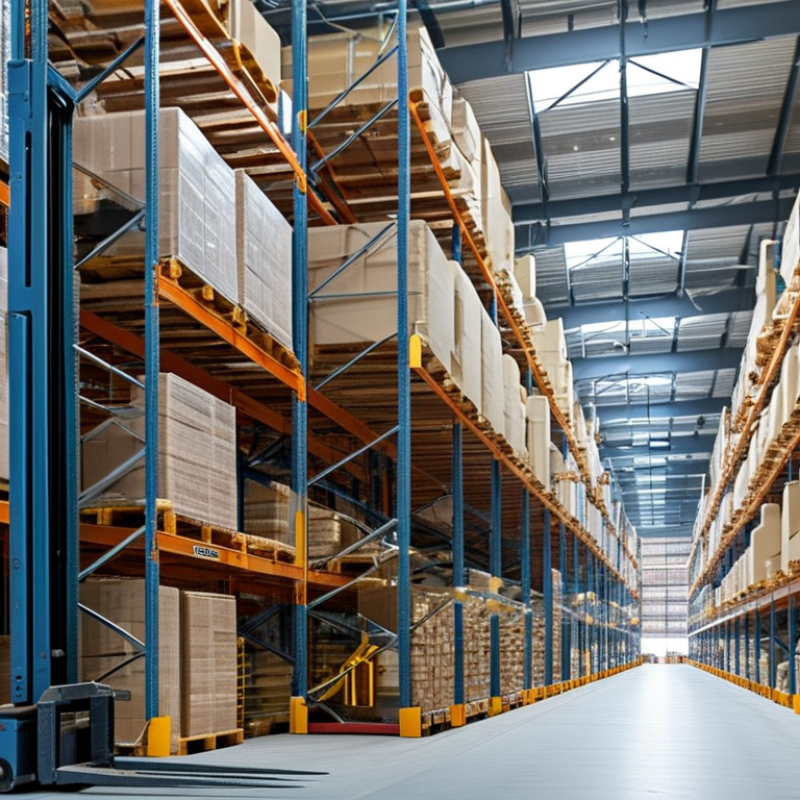
What Defines a Leading Warehouse Racking System Supplier in China
A leading warehouse racking system supplier in China offers more than low factory pricing. It demonstrates engineering experience, traceable materials, and disciplined quality control. MHI’s 2024 Annual Industry Report reported that 87% of respondents expect inventory and network optimization technologies to gain adoption within five years. This shift requires racking that supports accurate storage, safer access, and future automation.
Reliable suppliers begin with a site survey, not a quotation. They review pallet dimensions, load weights, aisle widths, floor conditions, and seismic risks. Engineers should provide structural calculations, installation drawings, and load signs for every bay. Practical references matter too. Ask to inspect warehouses using similar beam lengths and loads. Request welding records, coating thickness checks, and batch-based steel certificates. Standards such as EN 15635 can guide inspection and maintenance practices. Yet paperwork alone is not proof. A supplier may still miss a site-specific weakness.
Tips: Compare total ownership cost, not only purchase price. Check corrosion protection beside loading docks. Confirm replacement beams and technical support before signing. Ask who supervises installation and who accepts the final inspection. Keep these questions documented.
The strongest supplier also communicates clearly after delivery. It trains operators, explains damage reporting, and schedules periodic inspections. Transparent limits show professionalism. No system is perfect; even a well-designed rack can fail through impact, overloading, or poor maintenance. Choosing a supplier means assessing both its products and its working habits.
| Evaluation Dimension | Relevant Data or Standard | What a Leading Supplier Should Demonstrate | How Buyers Can Verify It |
|---|---|---|---|
| Structural Design | Rack design should be based on the intended pallet load, bay configuration, beam level, building conditions, seismic requirements, and operating environment. | Provides project-specific structural calculations rather than relying only on standard product drawings. | Request signed calculations, load tables, design assumptions, and drawings showing upright, beam, bracing, anchor, and floor-load details. |
| Technical Compliance | Common reference standards include EN 15512 for adjustable pallet racking design, EN 15629 for specification, EN 15635 for safe use and maintenance, and ANSI/RMI MH16.1 for industrial steel storage racks. | Clearly identifies the standards used for design, manufacturing, installation, and inspection in the quotation and technical documents. | Check the edition of each cited standard and confirm that the proposed design, testing, and documentation align with the destination market. |
| Product Portfolio | Typical warehouse solutions include selective pallet racking, drive-in racking, double-deep racking, push-back racking, pallet flow racking, carton flow shelving, and mezzanine systems. | Can recommend the appropriate system according to SKU count, pallet quantity, rotation rate, available height, forklift type, and required selectivity. | Compare the proposed storage density, access method, usable volume, and operating restrictions for the same warehouse layout. |
| Load and Safety Information | Rated capacity must specify the load per pallet, beam level, bay, or upright frame, together with the assumed load distribution and safety factors. | Uses permanent load plaques or equivalent identification and supplies installation, inspection, and maintenance instructions. | Confirm that the load rating is stated for the exact beam length, upright height, number of levels, pallet type, and configuration being purchased. |
| Manufacturing Quality | Important controls include steel traceability, material thickness, roll-forming accuracy, welding quality, coating adhesion, dimensional tolerance, and finished-part inspection. | Maintains documented quality-control procedures and can provide inspection records for critical components. | Review material certificates, coating specifications, inspection plans, sample reports, and production-line quality records. |
| Surface Protection | Common finishes include powder coating, electrostatic coating, and hot-dip galvanizing. The suitable finish depends on indoor use, humidity, chemicals, temperature, and outdoor exposure. | Recommends a coating system based on the warehouse environment instead of offering one finish for every application. | Check coating type, nominal thickness, color specification, pretreatment process, corrosion-resistance requirements, and warranty exclusions. |
| Customization Capability | Key configurable dimensions include bay width, frame depth, upright height, beam elevation, aisle width, pallet size, floor condition, and material-handling equipment. | Can produce layout drawings and revise the system around actual building constraints and workflow requirements. | Provide the warehouse plan, clear height, column positions, fire-system constraints, pallet dimensions, and forklift specifications for a design review. |
| Installation and Commissioning | Safe installation requires level floors, correct anchoring, frame alignment, beam locking, approved accessories, and protection against impact. | Offers installation supervision or qualified installation support and provides completion records after inspection. | Ask for an installation method statement, anchor requirements, tolerance limits, punch-list process, and handover checklist. |
| Safety Management | EN 15635 recommends systematic inspection and maintenance of storage equipment, including reporting and corrective action for damage. | Provides inspection guidance, damage-classification procedures, replacement-part recommendations, and user training materials. | Verify that the supplier explains inspection frequency, responsibilities, repair procedures, and rules for damaged rack components. |
| Project Documentation | Core documents normally include approved drawings, bills of materials, load data, installation instructions, operating guidance, inspection records, and warranty terms. | Maintains consistent document control and supplies the final approved version for the installed configuration. | Make document delivery a contractual milestone and confirm that revisions are tracked and approved before production. |
| Supply-Chain Reliability | Project risk is affected by raw-material availability, production capacity, packaging, export preparation, container planning, and spare-component availability. | Provides a realistic production schedule with inspection points and communicates risks before they affect shipment. | Request a production plan, packaging specification, pre-shipment inspection procedure, spare-parts list, and documented change-control process. |
| Commercial Value | Total cost includes equipment, engineering, accessories, packaging, freight, duties, installation, maintenance, future expansion, and replacement parts. | Offers a transparent total-cost comparison instead of competing only on the lowest equipment price. | Compare equivalent specifications, including steel grade, thickness, load rating, coating, accessories, delivery terms, warranty, and service scope. |
| After-Sales Support | Racking systems require long-term access to compatible beams, uprights, bracing, protectors, safety pins, and other replacement components. | Maintains clear warranty terms and can support spare-parts identification using drawings, part numbers, and installed-system records. | Ask for response procedures, warranty exclusions, spare-part lead-time commitments, and the process for reporting damage or design changes. |
| Supplier Shortlisting Score | Recommended weighting for a structured comparison: technical compliance 25%, safety and engineering 25%, manufacturing quality 20%, project delivery 15%, service support 10%, commercial value 5%. | Ranks strongly across safety, engineering, quality, delivery, and support rather than receiving a high score from price alone. | Use the same scoring sheet, evidence requirements, and technical assumptions for every shortlisted supplier. |
Related Posts
-
How to Choose the Best Industrial Storage Solutions?
-
How to Choose the Best Pallet Rack Shelving for Your Warehouse?
-
Top 10 Warehouse Racking Systems to Maximize Space and Efficiency
-
Top 10 Warehouse Pallet Racks for Maximizing Storage Efficiency?
-
2026 Best Pallet Rack Beams for Global Buyers in Warehouse Storage?
-
Top 10 Warehouse Shelving Racks You Need to Know?