Why Choose an Energy Storage Battery for Global Buyers?
For global buyers, choosing an Energy Storage Battery is a practical decision, not a trend-driven purchase. It affects resilience, operating costs, safety, and future expansion. A warehouse in Dubai may need evening cooling support, while a rural clinic in Kenya may require dependable overnight power. These sites face different temperatures, grid conditions, and maintenance skills. The battery must fit the real location.
Experienced procurement teams examine usable capacity, cycle life, round-trip efficiency, thermal management, warranty terms, and software controls. They also check cell chemistry, enclosure ratings, fire protection, and replacement procedures. Lithium iron phosphate systems often attract buyers because of their thermal stability and long service potential. Yet no chemistry is perfect. Weight, charging speed, installation space, and project cost still matter. A lower purchase price can become expensive when downtime or difficult servicing appears.
Credible suppliers provide test reports, traceable component information, clear performance assumptions, and responsive technical support. Buyers should request data at the intended temperature and loading profile, rather than trusting one laboratory number. They should also confirm applicable transport, electrical, recycling, and installation requirements in each market. Standards and approval pathways differ across regions. Careful verification protects both the investment and the people operating it.
The strongest choice usually matches demand, risk tolerance, and local expertise. Forecasts can be wrong. Loads change. A flexible design leaves room for surprises through modular capacity and monitored performance. Site records, commissioning checks, and regular inspections turn promises into evidence. For global buyers, that discipline makes energy storage more dependable, measurable, and easier to scale.
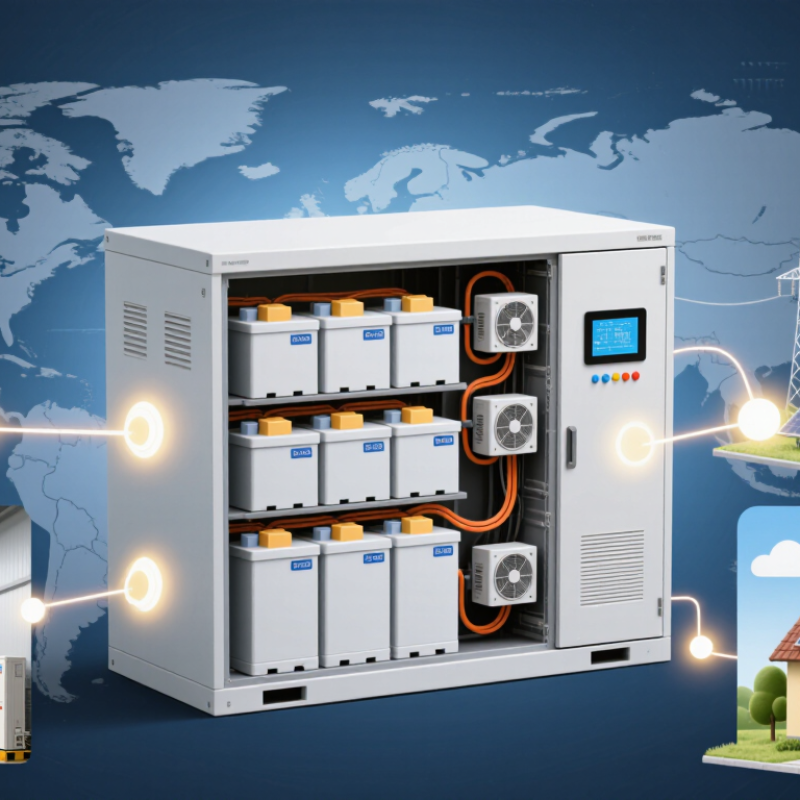
What Is an Energy Storage Battery?
An energy storage battery is an electrochemical system that stores electricity and releases it when needed. Charging moves energy into battery cells. Discharging sends that energy to appliances, vehicles, or the grid. Most systems also include an inverter, battery management system, cooling equipment, and safety controls. The battery is only one part.
The technology is expanding quickly. The International Energy Agency reported that global battery storage additions exceeded 40 gigawatts in 2023, more than doubling from the previous year. BloombergNEF’s 2024 Battery Price Survey placed the average lithium-ion pack price at 115 dollars per kilowatt-hour. Lower prices improve access, but they do not guarantee a suitable project. Capacity matters. So does usable energy.
A buyer should examine cycle life, round-trip efficiency, operating temperature, degradation, and warranty conditions. A battery rated at 100 kilowatt-hours may deliver less usable energy after reserve limits and conversion losses. That detail is often overlooked. Site conditions also matter. A dusty desert installation needs different thermal protection than a humid coastal facility. Local grid codes, fire standards, transport rules, and maintenance access must be checked before procurement. The IEA notes that battery storage supports renewable integration and grid flexibility, yet long-duration applications still require careful technology selection. A low purchase price can become expensive when replacement cells, software limits, or difficult servicing are ignored. Perfect forecasts are unrealistic. Better decisions come from measured data, transparent testing, and honest assumptions.
How Energy Storage Batteries Work
An energy storage battery works by converting electrical energy into chemical energy, then releasing it when demand rises. During charging, an inverter changes alternating current into direct current. Battery cells store that energy through controlled electrochemical reactions. During discharge, the inverter reverses the process and supplies usable electricity to homes, factories, or grids.
A battery management system monitors voltage, temperature, current, and state of charge. It balances individual cells and disconnects unsafe circuits. Thermal management is equally important in hot warehouses or cold northern sites. NREL’s 2024 Annual Technology Baseline estimates roughly 85–95% round-trip efficiency for utility-scale lithium-ion systems, depending on design and operating conditions. Some energy is always lost.
Not perfect. Batteries do not create electricity.
Their value comes from timing. They can store midday solar power and release it after sunset. They can also respond to grid changes within seconds. The International Energy Agency reported in Batteries and Secure Energy Transitions (2024) that global energy storage capacity must expand substantially this decade to support clean-power growth. For global buyers, system sizing should consider local tariffs, weather, grid rules, fire protection, and replacement planning. A large battery may look impressive, yet poor cycling assumptions can reduce its financial value. Real performance depends on daily operation, not only advertised capacity.
Why Choose an Energy Storage Battery for Global Buyers? - How Energy Storage Batteries Work
| Battery Technology | How It Works | Typical Round-Trip Efficiency | Typical Cycle Life | Response Time | Typical Storage Duration | Common Applications | Key Buying Considerations |
| Lithium-Ion | During charging, electrical energy is converted into chemical energy. During discharge, lithium ions move between the electrodes and release electricity. | Approximately 85%–95% | Approximately 3,000–10,000 cycles, depending on chemistry, operating temperature, depth of discharge, and charging conditions. | Milliseconds to seconds | Seconds to several hours | Solar and wind integration, backup power, peak shaving, microgrids, and electric mobility infrastructure. | Battery management system, thermal management, fire protection, installation standards, warranty conditions, and end-of-life recycling. |
| Lead-Acid | Lead dioxide and lead electrodes react with sulfuric acid during charging and discharging to store and release electrical energy. | Approximately 70%–85% | Approximately 500–1,500 cycles, strongly affected by depth of discharge and maintenance. | Milliseconds to seconds | Seconds to several hours | Small backup systems, telecommunications, emergency lighting, and low-cost off-grid installations. | Lower upfront cost, heavier weight, shorter service life, ventilation requirements for some designs, and proper lead recycling. |
| Vanadium Redox Flow Battery | Energy is stored in liquid electrolytes held in tanks. Pumps circulate the electrolytes through a cell stack, where ion exchange produces electricity. | Approximately 65%–85% | Often 10,000–20,000 cycles or more, depending on system design and operating conditions. | Seconds | Several hours to more than 10 hours | Large-scale renewable integration, long-duration energy shifting, and utility or commercial microgrids. | Large footprint, pumps and auxiliary energy use, higher initial system complexity, and suitability for stationary applications. |
| Sodium-Ion | Sodium ions move between the cathode and anode during charging and discharging, using sodium rather than lithium as the primary charge carrier. | Approximately 80%–92%, depending on cell and system design | Commonly specified at approximately 3,000–6,000 cycles for current commercial designs | Milliseconds to seconds | Seconds to several hours | Stationary storage, backup power, low-temperature applications, and cost-sensitive energy systems. | Commercial availability, energy density, supplier technical support, certification, operating temperature, and total system cost. |
| Nickel-Metal Hydride | Hydrogen is stored in a metal-hydride electrode and moves through an alkaline electrolyte during charging and discharging. | Approximately 60%–80% | Approximately 500–2,000 cycles, depending on design and usage profile | Milliseconds to seconds | Seconds to several hours | Specialized backup systems, industrial equipment, and applications requiring robust performance over a broad temperature range. | Lower energy efficiency than many lithium-ion systems, higher self-discharge, material cost, and limited use in large stationary storage. |
Note: Performance figures are typical industry ranges rather than guaranteed values. Actual results vary with cell chemistry, system architecture, temperature, depth of discharge, charging rate, maintenance, and operating strategy.
Key Benefits for Global Buyers
Why Choose an Energy Storage Battery for Global Buyers?
Energy storage batteries help global buyers manage unstable electricity prices and grid interruptions. The International Energy Agency reported nearly 42 GW of new battery storage capacity in 2023. That figure more than doubled from the previous year. The trend is practical, not merely fashionable. A warehouse can charge batteries during low-price hours, then support refrigeration, lighting, or machinery during peak periods. That matters.
Cost control is another benefit. The International Renewable Energy Agency reported that battery storage costs fell sharply between 2010 and 2023. Lower equipment costs can improve project returns, especially where diesel generation remains expensive. A battery also reduces brief power losses that can spoil chilled goods or stop production lines. Small failures become expensive. Yet cheaper hardware does not guarantee savings. Poor sizing, weak maintenance, and unsuitable temperature control can reduce the expected value.
Global buyers also need safer procurement and predictable operation. Battery systems should include thermal monitoring, tested protection devices, clear warranty terms, and local service planning. The buyer should check cycle life under real operating conditions, not only laboratory figures. Transport rules, grid standards, recycling duties, and site weather also vary by country. Details decide. A professional assessment should compare load profiles, tariff data, installation conditions, and replacement assumptions. The calculation may still be imperfect, but transparent assumptions make mistakes easier to detect and correct.
Types of Energy Storage Batteries
For global buyers, battery chemistry shapes cost, safety, service life, and installation requirements. Lithium-ion batteries remain common because they store substantial energy in compact cabinets. Within this group, lithium iron phosphate offers strong thermal stability and long cycle life. Nickel-manganese-cobalt batteries provide higher energy density, but they require stricter thermal management. That distinction matters.
Lead-acid batteries suit backup systems with limited daily cycling and familiar maintenance practices. They are heavier and often need ventilation in dedicated battery rooms. Flow batteries use liquid electrolytes stored in external tanks. Their energy capacity can expand by increasing tank volume, making them useful for long-duration projects. Sodium-ion batteries are emerging for cost-sensitive applications and colder climates, although their market data remains less mature. Early promises need careful checking.
In project reviews, I compare usable capacity, not only the nameplate rating. A 100 kWh battery may deliver less after reserve limits, temperature effects, and aging. Buyers should request cycle-life test conditions, warranty terms, safety certifications, and local service arrangements. Check the enclosure rating too. Dust, humidity, and salt air can shorten equipment life. Software compatibility also matters when batteries connect with solar systems or energy management controls. I have seen attractive specifications fail during integration because communication protocols were overlooked. No chemistry fits every site. Load patterns, climate, grid rules, transport conditions, and fire-protection plans deserve equal attention before procurement.
Why Choose an Energy Storage Battery for Global Buyers?
Lithium-ion batteries generally provide higher gravimetric energy density than lead-acid and flow batteries, making them suitable where space and weight are important. Lithium iron phosphate (LFP) batteries are widely selected for stationary storage because of their strong thermal stability and long cycle life, while sodium-ion batteries can be attractive where lower-cost and resource diversification are priorities. Actual performance varies by cell design, operating conditions, temperature, and system configuration.
The chart uses representative midpoint values from commonly reported industry ranges for rechargeable energy-storage technologies. Energy density is measured in watt-hours per kilogram (Wh/kg).
How to Choose the Right Energy Storage Battery
Choosing the right energy storage battery starts with the load, not the advertised capacity. Record daily consumption, peak demand, and critical devices such as pumps, refrigerators, or medical equipment. A 5 kWh battery may support essential lighting overnight, but it may not run a heating system for long. Measure real usage over several days.
Check chemistry, usable capacity, round-trip efficiency, cycle life, and operating temperature. Lithium iron phosphate batteries often offer strong thermal stability and long service life. However, chemistry alone does not decide suitability. A coastal warehouse may require stronger corrosion protection, while a cold region needs reliable low-temperature charging control. Confirm that the battery matches the inverter voltage and communication system.
Safety documentation matters. Ask for test reports, protection features, warranty conditions, and certifications accepted in the installation country. Review whether the warranty covers capacity loss, not only hardware failure. A qualified installer should inspect ventilation, cable size, isolation switches, and emergency access. Small details matter.
Do not size the system from one sunny day. Use seasonal data, outage duration, and future load changes. An oversized battery can increase cost and sit underused; an undersized unit can disappoint during a blackout. No checklist is perfect. Recheck assumptions with measured data, especially when weather, tariffs, or household habits change.
