Top 10 Warehouse Racking Systems to Maximize Space and Efficiency
In today's fast-paced logistics environment, the efficiency of space utilization in warehouses is paramount. According to Mark Johnson, a leading expert in warehouse management, “Choosing the right warehouse racking system is not just about storing goods; it's about creating a streamlined workflow that enhances productivity and minimizes costs.” With a myriad of options available, organizations must carefully assess their needs to identify the most suitable racking solutions that cater to their specific operational requirements.
As businesses strive to optimize their storage capabilities, understanding the various types of warehouse racking systems becomes essential. From selective racking to drive-in systems, each style offers distinct advantages that can significantly impact inventory accessibility and overall operational efficiency. Implementing an effective warehouse racking system not only maximizes available space but also contributes to safer and more organized work environments.
In this article, we will delve into the top 10 warehouse racking systems that can transform a cluttered warehouse into a model of efficiency. By examining the features, benefits, and ideal use cases of these systems, we aim to equip warehouse managers and facility planners with the insights needed to make informed decisions for their storage needs.
Choosing the Right Racking System for Your Warehouse Needs
When selecting the ideal racking system for your warehouse needs, it’s essential to consider factors such as
storage volume,
accessibility, and
inventory type.
According to a recent report by the Warehousing Education and Research Council (WERC), an efficient racking system can
improve space utilization by as much as
50%. This statistic highlights the importance of choosing a system tailored to your specific operational requirements.
For instance, if you're managing a diverse inventory with various item sizes, a
selective racking system might be optimal,
allowing for easy access and organization.
Moreover, the material handling equipment and the flow of goods should also guide your choice. A study from the Material Handling Industry of America (MHIA) suggests that
implementing a pallet racking system can decrease picking time by up to
30%, significantly boosting overall efficiency.
It is important to assess your warehouse's layout, the types of products stored, and the volume of turnover when determining the best racking option.
By carefully considering these aspects, you can enhance operational efficiency and ensure that your warehouse adapts to changing demands in the industry.
Understanding Different Types of Warehouse Racking Systems
Warehouse racking systems are essential for maximizing both space and operational efficiency. To understand the various types available, it’s crucial to consider the specific needs of your warehouse. The most common types include selective racking, which offers easy access to all pallets and is ideal for warehouses with a wide variety of goods. On the other hand, drive-in racking systems allow forklifts to drive directly into the rack, maximizing storage density and minimizing aisle space.
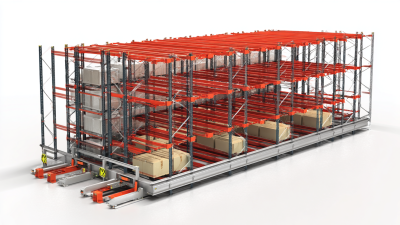
Another popular option is the push-back racking, which enables stock to be loaded from one side and retrieved from the other, allowing for a First-In-Last-Out (FILO) inventory flow. For businesses with a consistent inventory turnover, pallet flow racking systems can be particularly beneficial, utilizing gravity to move pallets down a series of inclined rollers, facilitating effective stock rotation. Understanding the advantages of each system can significantly impact warehouse operations, leading to improved productivity and optimized space utilization.
Top 10 Warehouse Racking Systems to Maximize Space and Efficiency
| Racking System Type |
Description |
Max Height (ft) |
Load Capacity (lbs) |
Best For |
| Selective Racking |
Most common type allowing access to each pallet. |
30 |
4,000 |
General storage |
| Drive-In Racking |
Allows forklift access from the side for high density. |
25 |
6,000 |
Bulk storage |
| Push Back Racking |
Utilizes a system of carts that push pallets back. |
25 |
4,500 |
FIFO inventory management |
| Pallet Flow Racking |
Gravity-driven system for high-density storage. |
20 |
5,000 |
Dynamic storage needs |
| Cantilever Racking |
Designed for long or bulky items, easy access. |
15 |
3,000 |
Lumber, pipes, and longer items |
| Mobile Racking |
Racks mounted on mobile bases to save space. |
20 |
4,500 |
High-density operations |
| Mezzanine Racking |
Elevated platform to add additional storage levels. |
10 |
Varies by design |
Maximizing vertical space |
| FIFO Pallet Racking |
First in, first out system for perishable goods. |
20 |
4,500 |
Food and medical supplies |
| Steel Shelving |
Industrial shelving for small parts and inventory. |
12 |
1,000 |
Office supplies and small tools |
| Bulk Storage Racking |
For very high density storage of large bulk materials. |
30 |
8,000 |
Heavy items and pallets |
Tips for Optimizing Vertical Space with Racking Solutions
When it comes to maximizing warehouse space and efficiency, one of the best strategies is optimizing vertical storage with effective racking systems. According to a report by the Warehousing Education and Research Council (WERC), utilizing vertical space can increase storage capacity by up to 40%. Implementing the right racking solution not only frees up floor space but also streamlines the retrieval process, leading to faster workflows and reduced labor costs.
Tips for Optimizing Vertical Space:
1. Select the Right Racking Type: Consider using high-density storage solutions like selective pallet racking or drive-in racking to make the most of your vertical height. For example, a multi-tier shelving system can allow for products to be stored at various heights, which can be especially beneficial for smaller items.
2. Implement Effective Warehouse Management Systems (WMS): A robust WMS can help track inventory levels and improve space utilization by organizing products based on their turnover rates. This data ensures that high-demand items are easily accessible, while slower-moving stock is stored higher up, maximizing the advantages of vertical space.
3. Regularly Review and Adjust Layouts: Conduct periodic assessments of your racking systems and warehouse layout to ensure they align with current inventory needs. Reports indicate that re-evaluating storage strategies every six months can lead to a significant increase in efficiency and space optimization.
Maximizing Efficiency through Strategic Racking Layouts
In today's fast-paced logistics environment, maximizing warehouse space and operational efficiency is paramount. Strategic racking layouts can significantly enhance the overall performance of a warehouse. According to a report by the Warehousing Education and Research Council (WERC), optimizing racking systems can increase storage capacity by up to 40%. This not only allows for more inventory to be stored but also reduces the time spent picking and organizing products, leading to improved productivity.
One effective approach is implementing a selective racking system paired with a layout designed to minimize travel time. Studies indicate that layout efficiency can reduce picking times by as much as 30%, resulting in a more streamlined operation. Additionally, integrating automated racking solutions can further maximize space utilization. A report from the Automated Storage and Retrieval Systems (ASRS) industry notes that such systems can improve space efficiency by up to 50%, allowing businesses to meet increasing order demands without the need for significant capital investment in new facilities.
By strategically utilizing various racking systems and focusing on effective layouts, warehouses can not only maximize space but also foster a more efficient operational flow. These improvements are essential in staying competitive in a market that increasingly demands faster turnaround times and higher accuracy rates.
Top 10 Warehouse Racking Systems to Maximize Space and Efficiency
Maintaining Safety Standards in Warehouse Racking Installation
Maintaining safety standards during warehouse racking installation is crucial to ensure both operational efficiency and worker safety. The correct installation of racking systems involves adhering to guidelines set by organizations such as the Occupational Safety and Health Administration (OSHA) and following manufacturers' recommendations. A well-planned installation includes assessing load capacities, ensuring that the racking system can accommodate weight without risk of collapse, and verifying that the structure is anchored properly. Furthermore, regular inspections and maintenance of the racking systems can prevent potential hazards caused by wear and tear.
Additionally, providing comprehensive training for warehouse staff is essential to uphold safety standards. Employees should be educated about proper loading techniques, the importance of maintaining clear pathways, and recognizing the signs of wear in racking systems. Encouraging a culture of communication about safety concerns can lead to quicker identification of potential risks. Overall, emphasizing safety during the installation and operational phases of warehouse racking can significantly enhance both the effectiveness and longevity of the systems in place.