Top 10 125Amp MCCB Manufacturers for Global Buyers
Choosing the right 125amp Mccb manufacturer is more than comparing prices on a product page. Global buyers need dependable protection, consistent production, and clear technical documentation. A molded case circuit breaker may look simple, yet its performance depends on interrupting capacity, thermal-magnetic settings, insulation quality, and tested endurance.
This guide introduces ten manufacturers serving industrial, commercial, and infrastructure markets. Each company is considered through practical purchasing criteria, including product range, factory experience, certification practices, customization support, delivery capability, and after-sales communication. These factors matter when a breaker must protect a busy workshop, a data-room distribution panel, or a solar power installation exposed to heat and dust.
Details matter.
A reliable supplier should explain whether its 125amp Mccb supports adjustable protection, suitable terminal configurations, and the voltage requirements of the intended system. Buyers should also verify regional compliance independently, because certificates and approvals can vary between markets. Factory audits, sample testing, and documented quality procedures offer stronger evidence than promotional claims alone.
No ranking is perfect. Manufacturer performance can change with production batches, local distributors, and project conditions. Some suppliers may excel in customization but provide slower delivery. Others may offer broad availability while limiting technical support. This overview therefore aims to provide a realistic starting point, not a final purchasing decision. By comparing capabilities carefully, procurement teams can reduce installation risks, avoid unclear specifications, and select a partner that supports safe, dependable electrical distribution over time.
What Is a 125A MCCB and Where Is It Used?
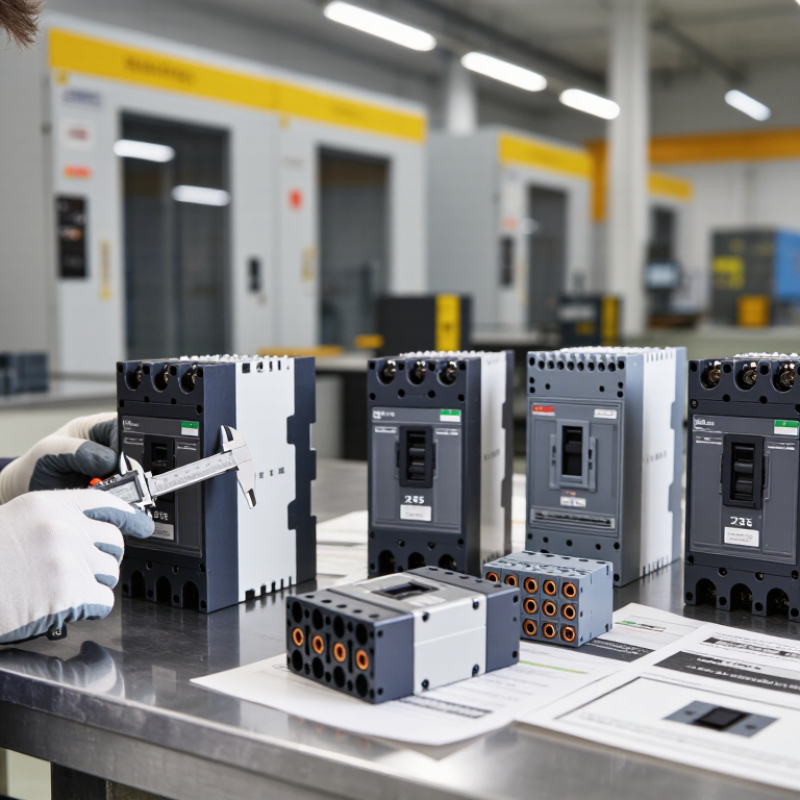
A 125A molded-case circuit breaker (MCCB) carries loads up to 125 amperes under defined conditions. It interrupts overloads and short circuits. Most models use thermal-magnetic protection, while advanced versions use electronic trip units. The 125A rating is only one specification. Short-circuit capacity, voltage, pole configuration, trip settings, and enclosure temperature also matter. IEC 60947-2 defines key requirements for low-voltage circuit-breaker performance. At 40°C ambient temperature, heat inside a crowded cabinet can reduce practical capacity. That detail is easy to miss.
125A MCCBs commonly protect feeders in workshops, commercial buildings, water-treatment systems, and small industrial panels. A factory may use one to supply motors, compressors, or a secondary distribution board. Solar inverters and battery systems can also require MCCB protection, depending on their design. The International Energy Agency’s Electricity 2024 report expects global electricity demand to grow by an average 3.4% annually from 2024 through 2026. Expanding loads increase pressure on low-voltage distribution equipment. Yet selection is not plug-and-play. Buyers must compare cable ampacity, prospective fault current, discrimination, operating altitude, and local installation rules. A 125A breaker on undersized cable is dangerous. An oversized breaker may fail to protect the circuit. That shortcut is tempting, but incomplete. For global buyers, verified test certificates and clear technical drawings matter more than the ampere label alone.
Key Standards and Specifications Global Buyers Should Check
For global buyers, a 125A MCCB should be judged by tested performance, not frame size alone. IEC 60947-2 defines requirements for low-voltage circuit breakers, while UL 489 applies to many North American installations. Check the exact certification mark and test edition. A 125A rating may describe the trip unit, frame, or continuous current. These are not always identical.
Focus on Icu and Ics values at the intended voltage. Icu shows ultimate short-circuit breaking capacity, while Ics indicates service-level performance after interruption. For North American projects, verify the available fault current and SCCR requirements. A higher interrupting rating can prevent costly redesigns. Also check pole configuration, insulation voltage, impulse withstand voltage, and thermal derating. At 40°C, a breaker may perform differently than it does inside a hot control cabinet.
The IEA’s Electricity 2024 report expects global electricity demand to grow strongly through 2026, increasing pressure on dependable distribution equipment. Market research from Fortune Business Insights also projects continued expansion in the global circuit breaker market through the decade. These figures support careful sourcing, but they do not replace application testing. Ask for type-test reports, trip curves, calibration data, and temperature-rise results. Verify operation at altitude, humidity, and frequent switching conditions. I have found catalogue values useful, but sometimes incomplete. The installation environment matters more. A lower-cost MCCB can become expensive when coordination data is missing. Check selectivity with upstream and downstream protective devices before approval.
Top 10 125A MCCB Manufacturers and Their Market Strengths
The leading 125A MCCB manufacturers serve different buyer priorities, not one universal standard. Some focus on compact enclosures and dense distribution boards. Others emphasize high breaking capacity, thermal stability, or harsh-environment performance. MarketsandMarkets reported that the global circuit breaker market could grow from about USD 7.3 billion in 2023 to USD 10.4 billion by 2028. This growth supports stronger demand for reliable low-voltage protection.
For global buyers, the strongest manufacturers usually provide IEC 60947-2 compliance, traceable test reports, and stable production quality. Their market strengths may include regional inventory, adjustable trip units, molded-case durability, or customization for industrial panels. A 125A MCCB should also match the system’s prospective short-circuit current, ambient temperature, cable size, and coordination plan. One weakness in many comparisons is overreliance on price. Cheap procurement can create expensive replacement work later.
Tips: Request recent type-test evidence, not only a certificate copy. Check whether the 125A rating applies at the required enclosure temperature. Confirm Icu and Ics values for the installation voltage. Review warranty response times and local spare-part availability. UL 489 may matter in North American projects, while IEC 60947-2 is widely used elsewhere. No ranking is perfect. Field feedback, failure records, and installer experience still deserve careful review.
How to Select the Right Supplier for Your Project
Choosing among the top 10 125Amp MCCB manufacturers requires more than comparing prices. The IEA Electricity 2024 report expects global electricity demand to grow by about 4% annually through 2026. That growth increases pressure on low-voltage protection systems. Select a supplier with proven experience in industrial, commercial, or infrastructure projects similar to yours.
Check the MCCB’s rated current, voltage, and short-circuit performance. IEC 60947-2 defines key requirements for circuit breakers, including Icu and Ics ratings. Ask for current test reports from an accredited laboratory. Do not accept a general certificate alone. Verify temperature derating, pole configuration, trip-unit accuracy, and coordination data with upstream devices. Fit matters. A 125Amp label does not guarantee reliable performance in a hot panel.
Supplier quality also depends on evidence beyond the product. Review factory-control procedures, batch traceability, inspection records, and replacement-part availability. Request samples before approving a large order. Compare realistic lead times, packaging, warranty terms, and technical support across regions. A lower quotation may hide weak documentation or expensive delays. I have seen projects overvalue unit price and undervalue commissioning support. That judgment can be costly. Consider an on-site or remote factory audit, especially when the MCCB protects critical loads. Reliable suppliers explain limitations clearly, instead of promising everything.
