How to Choose Aerosol Can Cone and Dome Parts?
Choosing the right Aerosol Can Parts Cone And Dome requires more than matching a drawing or selecting the lowest quotation. These components shape the can’s upper profile, support the valve area, and influence sealing performance during filling, storage, and transport. In practical manufacturing work, small differences matter. A cone that looks correct may still create assembly stress. A dome with an unsuitable opening can affect valve placement and crimp consistency.
Material compatibility deserves close attention. Review the can body material, coating system, product formulation, and expected storage conditions. Steel and aluminum may require different forming considerations. Check wall thickness, dimensional tolerances, surface finish, and resistance to pressure and corrosion. Clear supplier drawings are essential. Reliable manufacturers should provide inspection records, material information, and traceable quality controls. Independent testing can confirm fit, leak resistance, and performance under realistic temperature changes.
The best selection also reflects the filling line. Ask whether the part runs smoothly through feeding, crimping, and final inspection equipment. A minor dimensional variation may cause stoppages or rejected units. I have seen teams focus heavily on appearance and overlook tooling wear. That choice became expensive. Still, no single specification suits every application. Requirements should be reviewed with qualified engineers, packaging specialists, and approved suppliers. Relevant industry standards and regional packaging requirements must guide the final decision. Some recommendations may need revision after testing. That is normal. Careful sampling, documented measurements, and honest review create a more dependable path to selecting aerosol can cone and dome components.
Define Cone and Dome Functions in Aerosol Can Pressure Systems
How to Choose Aerosol Can Cone and Dome Parts?
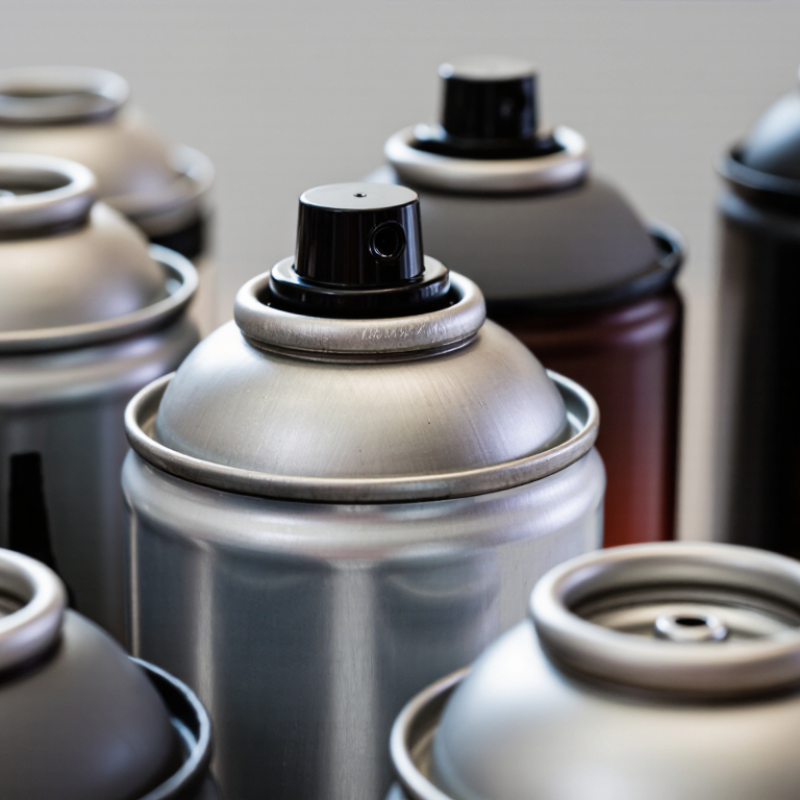
In aerosol pressure systems, the cone and dome are not decorative shapes. They guide force through the can’s upper structure. A cone creates a gradual transition from the cylindrical body to the valve area. This transition helps support the mounting surface and reduces sharp stress points. It can also provide space for the valve, actuator, and sealing components.
A dome uses a curved profile to distribute internal pressure more evenly. Its rounded surface can resist deformation better than a flat top. This matters when the filled can experiences temperature changes during storage or transport. The dome also helps maintain clearance around the valve assembly. Small changes in height or curvature may affect available volume and component fit. They should not be treated as interchangeable parts.
Selection should begin with measured dimensions, material thickness, filling pressure, and closure requirements. Check the contact area between the cone, dome, gasket, and valve cup. Look for smooth edges, consistent forming, and no visible cracks or thinning. Pressure testing should follow a documented and qualified procedure. A practical mistake is judging strength by appearance alone. A deeper dome may look safer, yet forming quality and metal distribution can matter more. In production, I would compare drawings with sample measurements before approval. That extra check often reveals misalignment, unexpected clearance, or sealing problems.
Match 35–76 mm Can Diameters with ISO 90-1 Dimensions
Choosing aerosol can cone and dome parts requires more than matching a visible top shape. The can diameter must align with the ISO 90-1 dimensional reference, especially across the 35–76 mm range. Measure the can body, neck, curl, and shoulder before selecting a component. A small error can affect valve seating, crimping, and seal performance.
For 35–50 mm cans, compact cones often support a narrower shoulder transition. Larger cans, from 51–76 mm, may need domes with stronger load distribution. Check the nominal diameter, wall thickness, opening profile, and allowable tolerances on the technical drawing. Do not rely on diameter alone. The valve cup, gasket, and crimp zone must also work as one assembly. Material compatibility matters when the formulation, propellant, or storage temperature changes.
A practical inspection uses calibrated gauges, sample cans, and trial assemblies. Review the latest ISO 90-1 requirements and compare them with the component supplier’s drawing. Standards guide the fit, but they may not cover every production detail. A common mistake is approving a part from one sample can only. Real batches vary slightly. I have seen acceptable-looking domes fail after crimping because the shoulder radius was overlooked. That detail deserves another check. Maintain inspection records, including measured diameters, sealing results, and test conditions.
Select Steel or Aluminum Parts from 0.18–0.45 mm Gauge Ranges
How to Choose Aerosol Can Cone and Dome Parts?
For cone and dome parts, material choice begins with thickness. In the 0.18–0.45 mm range, each step affects forming, stiffness, and weight. Steel usually offers higher rigidity and predictable shaping. Aluminum provides lower mass and strong corrosion resistance. The correct option depends on product pressure, filling temperature, and transport conditions. It is not simply a material preference.
FEA’s 2023 European Aerosol Production Statistics recorded more than five billion aerosol cans produced in Europe. That scale makes consistent thickness essential. A 0.18–0.25 mm section may reduce material use, but it demands accurate forming control. Thicker steel, around 0.30–0.45 mm, can better resist denting during handling. However, excess thickness adds weight and may increase forming force. That assumption can fail.
The International Aluminium Institute reports that recycled aluminum requires about 5% of the energy used for primary aluminum production. This supports aluminum selection when lightweight design and recovery matter. Still, engineers should inspect dome height, neck dimensions, seam compatibility, and coating performance. Small geometric errors can affect valve alignment. Test filled samples under pressure and temperature cycling. Real production evidence matters more than a spreadsheet. Specification review should include supplier gauges, tolerances, and inspection records.
Verify 50°C Pressure Performance Under EN 14847 Requirements
How to Choose Aerosol Can Cone and Dome Parts?
Cone and dome parts must survive more than forming and crimping. Their real test begins at 50°C. Heat increases internal pressure and exposes weak seams, thin walls, poor lacquer coverage, or distorted profiles. EN 14847 provides dimensional and construction guidance for tinplate aerosol containers. However, the applicable 50°C pressure requirement should also be checked against Directive 75/324/EEC and the approved test method. The UN Manual of Tests and Criteria, 8th revised edition, also treats 50°C as a key reference temperature for aerosol pressure evaluation.
Choose a cone with stable geometry around the valve opening. A small height variation can affect crimp depth and sealing force. For the dome, inspect curvature, metal thickness, compound compatibility, and transition areas. These details matter because pressure often concentrates near formed edges. A production report should record test temperature, holding time, pressure, batch number, and failure location. Visual inspection alone is insufficient. A part may look perfect and still fail after heating. This is an uncomfortable gap between design confidence and measured performance.
Tip: Test finished assemblies, not loose parts only. Use calibrated sensors and confirm the chamber reaches 50°C uniformly. Compare at least three production batches. If one result seems unusually good, repeat it. Small deviations may reveal a larger process problem. Avoid selecting parts only by price; material consistency and forming accuracy usually protect the whole container system.
Check Crimping, Valve Fit, and Leak Rates Before Production
How to Choose Aerosol Can Cone and Dome Parts?
Cone and dome selection should begin with the crimp, not appearance. A well-formed crimp holds the valve cup evenly around the can neck. Measure curl height, crimp diameter, and pressure depth after every tooling change.
The FEA European Aerosol Statistics 2023 reported more than five billion aerosol units in Europe. Small dimensional errors can therefore become major quality losses. A 0.1% leak rate means 100 failed cans in a 100,000-unit batch. That is not theoretical.
Check valve fit with the actual cone, dome, gasket, and coating combination. Do not rely only on supplier drawings. During pilot production, inspect valve seating, actuator alignment, and stem movement under pressure. Use pressure-decay or water-bath testing, based on your risk assessment and applicable standards.
Record results at different temperatures, because seals can behave differently after filling, storage, and transport.
Industry guidance and packaging studies, including FEA technical publications and Smithers’ aerosol packaging market analysis, repeatedly identify closure integrity as a critical performance point.
Watch the crimp profile closely. Too shallow, and the valve may shift. Too deep, and the gasket may deform. Sometimes the first trial passes, but later tooling wear changes the result. That deserves attention.
Set an internal leak target below the maximum allowed by your quality system, rather than treating the legal limit as a production goal. Keep retained samples from each run, including failed parts. They often reveal scratches, uneven lacquer, or tiny metal particles that routine checks miss.
