China Top 10 Pipe Rack Manufacturers for Global Buyers
Global buyers comparing pipe rack manufacturers need more than a polished catalog. A rack may look simple, yet its performance depends on load design, connection details, material choice, and installation conditions. Small errors matter. A beam suited to one facility may not fit another site’s spans, operating loads, or maintenance access. This guide introduces ten China-based manufacturers for buyers evaluating industrial storage and material-handling projects. It highlights practical considerations, including engineering support, fabrication capability, surface protection, customization, lead times, and export experience. These factors can affect total project cost as much as the quoted unit price.
Before shortlisting a supplier, review drawings, load tables, material specifications, inspection records, packaging plans, and warranty terms. Ask for project references where available, and clarify whether stated capacities match your operating conditions. A supplier’s answers to technical questions can be revealing. Still, gaps remain. Company rankings are a starting point, not an endorsement, and published information may not show every limitation. Product ranges and factory capabilities can also change. No shortlist is perfect. Treat this overview as a research aid, verify details directly with each manufacturer, and consult qualified engineers for demanding installations. Clear specifications can help prevent mismatches, delays, and costly revisions.
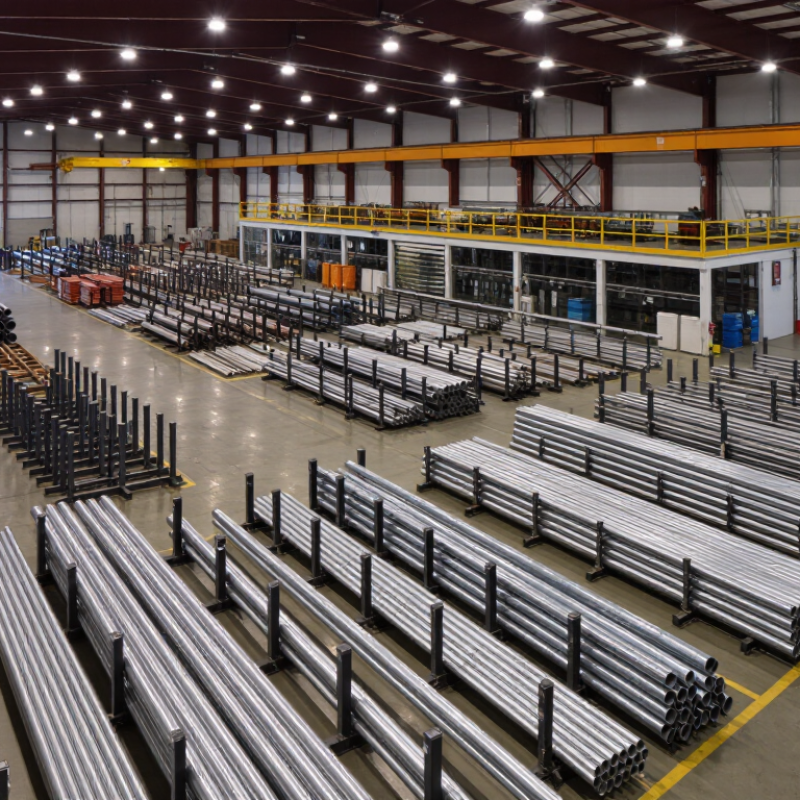
Pipe Rack Systems Defined: Structural Frames, Utility Corridors, and Modular Units
A pipe rack is a structural frame that supports process and utility piping above ground.
Columns, beams, and bracing carry pipe weight, operating loads, and forces from wind or thermal movement. Think of it as an elevated service route, not simply a row of supports. Small details matter. A drain line, valve, or cable tray can affect spacing and access.
As a utility corridor, the rack may carry water, steam, air, power, and instrumentation alongside process lines. Keep adequate separation where the design requires it, and leave room for insulation, maintenance, and safe access. For global buyers, clarify the project’s design basis, load cases, materials, and interface dimensions before comparing proposals. These items shape both cost and fit. A crowded drawing can conceal a difficult maintenance route.
Modular pipe racks are fabricated in sections and assembled on site, which can reduce field work and improve dimensional consistency. They can also make transport and lifting more demanding. Standardized modules are useful, but they may not suit every site constraint. A tidy model is not proof of an easy installation. Check connection details, lifting points, tolerances, and future expansion space against actual site conditions; small mismatches often surface only during assembly.
China’s Top 10 Pipe Rack Manufacturers Ranked by 5 Buyer-Critical Criteria
A credible ranking of China’s pipe rack manufacturers should compare five buyer-critical criteria: engineering capability, fabrication quality, material traceability, delivery reliability, and project support. Engineering reviews should check load calculations, connection details, and clear, revision-controlled drawings. Fabrication checks should cover weld inspection records, dimensional tolerances, and coating specifications. Ask for material certificates linked to identifiable steel batches. Paperwork matters.
For a transparent comparison, buyers can assign weights to each criterion and score suppliers against the same evidence. Delivery assessments should include realistic production schedules, export packing plans, and communication during design changes. The World Steel Association’s World Steel in Figures 2024 reports China produced 1,019.1 million tonnes of crude steel in 2023, about 54% of global output. That scale supports a broad supplier base; it does not prove an individual factory’s quality. UNCTAD’s Review of Maritime Transport 2024 notes that over 80% of world trade in goods by volume moves by sea, making packing and shipment coordination practical evaluation points. One caveat: polished audit files can hide weak shop-floor controls. Request recent inspection records, and verify how rejected parts are corrected. No score is perfect.
Design Benchmarks: GB 50017-2017, GB 50009-2012, and ASME B31.3
For global buyers comparing pipe-rack suppliers, design evidence matters more than a polished rendering.
GB 50009-2012 bases basic wind pressure on a 50-year return period. This is a code benchmark, not a substitute for site-specific wind data. Terrain, exposure, rack height, and nearby buildings can change the loading picture. GB 50017-2017 provides the steel-design framework for member strength, stability, and connections. Ask for calculation notes showing how bracing, base plates, and anchor forces were checked. Small omissions can become expensive.
Process piping needs a separate check.
ASME B31.3-2022, paragraph 345.4.2, generally sets hydrostatic test pressure at no less than 1.5 times design pressure, subject to temperature and allowable-stress limits. Pipe-rack reviews should also trace operating weight, insulation, thermal movement, and maintenance loads into the supporting steel. A practical submittal links each load case to drawings and calculation outputs. One point deserves a second look: a compliant rack can still be awkward to inspect or expand. Ask how the design accommodates access platforms, future lines, and real field tolerances.
Supplier Audit Data: Verify Span, Steel Grade, Fabrication Capacity, and QA Records
For global buyers comparing pipe-rack manufacturers, audit evidence matters more than a polished capacity brochure. worldsteel’s World Steel in Figures 2024 reports global crude steel production of 1,892.2 million tonnes in 2023. That figure shows industry scale, not any supplier’s verified output. Ask each factory to confirm the rack’s design span, support spacing, and loading assumptions on approved drawings. A “12-metre span” can mean different things unless its measurement points are clear.
Match the steel grade on drawings and purchase records to mill test certificates and heat numbers on fabricated members. Then check whether the claimed capacity fits the actual shop: available bay length, lifting equipment, monthly tonnage, and concurrent projects. Review weld maps, inspection records, and nonconformance close-out evidence. For a comparable rack, request dated production photographs and inspection reports, not just a sample certificate. A neat document can still hide a broken traceability chain. I have seen audits overvalue paperwork; shop-floor checks matter too.
Tips: Select one beam and trace it from its heat number to the finished member. Confirm span dimensions against the drawing revision, then sample weld inspection records. Record gaps plainly. Do not treat a missing record as proof of failure, but require a clear explanation and corrective evidence.
China Top 10 Pipe Rack Manufacturers for Global Buyers
Supplier audit reference: compare specified minimum yield strength when verifying structural steel grade.
Values are reference minimum yield strengths, not supplier audit results. EN 10025-2 values shown apply to products up to 16 mm thick; ASTM values are converted from the specified ksi ratings. Actual requirements vary by product form and thickness. Verify the delivered grade and dimensions against the project specification and material test certificates.
Global Buyer Checklist: Compare Codes, Certifications, Lead Times, and Lifecycle Costs
For global buyers, a pipe rack should match the project’s governing design code, site loads, and operating conditions. Check calculations for wind, seismic forces, thermal movement, and pipe weight—not just the quoted steel tonnage. Ask how corrosion protection suits the site, especially near salt air or chemical washdown. Details matter. Verify that certifications cover the actual facility, process, and inspection scope. Request material traceability records, weld inspection procedures, and coating reports before comparing suppliers.
Lead times need a closer look than a single delivery date. Confirm when drawings are submitted, when approval is due, and how fabrication, coating, packing, and shipping fit the schedule. A rack with standard sections may ship sooner than a highly engineered system, but only if the design fits. Ask for milestone dates and a clear plan for delays. Small schedule gaps can become costly during installation.
Compare lifecycle costs alongside the purchase price. Include installation labor, lifting access, coating repairs, inspection needs, spare parts, and downtime if sections require replacement. Request references for projects with similar spans, loads, and environments. Ask what changed after installation; suppliers may not have perfect answers, and that uncertainty deserves attention. A spreadsheet can miss field rework, so review assumptions with the engineering and maintenance teams before choosing.